


Truck mixer cleaning: how to manage washing, residues and water across the site cycle

Back
Truck mixer cleaning

After every concrete delivery, the chute, the tyres, the hopper and, from time to time, the inside of the drum stay in contact with cement, aggregates, water and any admixtures. If these materials are not dealt with, they form deposits. Once hardened, those deposits take far more time and money to remove than fresh residues.

Anyone who runs a fleet of truck mixers knows that internal build-up reduces mixing capacity and drum output. A truck taken out of service to remove hardened deposits is also unavailable for scheduled deliveries, so residue management affects the operational continuity of the whole fleet.

This article follows the job from start to finish. It covers what happens at the end of discharge on site and on return to the plant, and how truck mixer cleaning is carried out on the outside, on the inside and in the cases that require physical access to the drum. It then looks at where water and residues end up after washing and what to assess when organising the process, including when it makes sense to talk to a CIFA expert.


End of discharge on site: securing the truck and cleaning the chute and tyres

Once discharge is complete, and before leaving site, the operator secures the truck and cleans the parts that have been in contact with the concrete, in particular the discharge chute and the tyres. This should take place on a paved area equipped to collect wash water, never at a random spot on the site.

The positioning of the truck and the destination of water and residues follow the instructions of the site manager. Before cleaning, the operator applies the brakes and places chocks under the wheels. Once safely up on the platform, the operator washes the outside of the truck only when there are no overhead power lines nearby, always wearing the required PPE.

For as long as anyone is on the platform, including after washing, the drum must never be left rotating. Rotating parts, or the ladder closing, create a risk of cutting, shearing and abrasion.

Internal washing of the drum, with discharge into the reclaiming system, does not take place at this stage. As standard procedure it happens on return to the plant at the end of the day. 


Return to the plant: returned concrete and end-of-day washing

Two different situations can arise on return to the plant: handling any concrete that was not discharged on site ("returned concrete"), which follows the procedure of the receiving plant, and the end-of-day wash of the truck.

Returned concrete is handled according to the specific procedures of the batching plant. For operating details, refer to the plant's internal procedure and to the truck's Use and Maintenance Manual.

The end-of-day wash covers both the inside and the outside of the truck mixer and takes five steps:

  1. In the washing area, the operator stops the truck and secures it by placing chocks under the wheels.

  2. For the inside wash, water is fed into the rotating drum to dilute the cement slurry. This is the watery suspension of cement left in the drum during washing, and it should not be confused with hardened concrete.

  3. Once this stage is complete, the slurry is discharged into the slurry reclaiming system provided at the plant.

  4. The operator stops the drum before climbing onto the ladder platform, and from there washes the loading hopper and the outside of the drum.

  5. From the ground, the chute and the outside of the drum are washed last.

A thorough internal wash, carried out regularly, prevents deposits and build-up from forming. This reduces how often the more demanding internal cleaning described below is needed, and that task remains one of the riskiest for the driver.

The safety instructions apply throughout the washing stage at the plant: do not use acids for external cleaning or any substance hazardous to health, wash only when there are no overhead power lines, and always wear the prescribed PPE.

The typical risks of this stage are eye injuries from jets and splashes of slurry or pressurised water, impact and crushing from falling material, exposure to irritant chemical agents, slipping and shearing. How far these risks are controlled depends largely on following these instructions.


Routine maintenance and removal of build-up

Alongside the daily wash, routine cleaning at the plant includes washing the outside of the drum with high-pressure water pumps, removing hardened concrete from certain points of the machine with pneumatic tools, and the routine checks on the truck (flexible oil hoses, engine oil, rollers, lubrication and greasing).

Before starting, make sure that nobody is within range of the lance, that the engine is off and that the keys are with the operator. The lance must be pointed only at the machine, the chute flap must be opened using the anti-shearing handle, and nobody should climb down into the settling tank.

Accidental contact with chemical products is among the specific risks of this activity and calls for particular attention.
 

_C8B5466 buona


When does cleaning inside the drum become confined-space work?

Cleaning inside the drum becomes necessary when build-up starts to affect the truck mixer's mixing capacity and reduce its output. There is no fixed, predetermined interval.

As the CIFA Use and Maintenance Manual itself states, it also remains an extremely dangerous operation even when all the safety measures are followed, so it must be carried out with the utmost care. Hardened residues may be removed only if the manufacturer expressly provides for it in the machine's Use and Maintenance Manual. It is not an operation to be decided on one's own simply because it seems necessary.

When the work requires a person to enter the drum, it is classed as confined-space work and must be carried out by qualified, trained and instructed personnel under Article 2 of Italian Presidential Decree (D.P.R.) 177/2011. The driver may do it only if they meet these requirements. Other maintenance work inside the drum, such as welding, must also be done by qualified personnel and companies.


Precautions before entering the drum

The available sources agree on a sequence of precautions that complement one another:

  • Make the truck cab inaccessible, keep the vehicle keys with you and display the maintenance-in-progress sign.

  • Wear the appropriate PPE.

  • Stop the drum by fitting the dedicated mechanical locks. This is a critical step: if the drum is not locked, it can turn and bring the manhole down in front of the chassis, blocking the way out.

  • Check that there are no blocks of material above that could come loose because of vibration.

  • Find out in advance the depth and shape of the drum, the size of the manhole, whether visual or audible contact with the outside is possible, whether low-voltage electrical equipment (≤24V) is present, whether forced ventilation is needed and what emergency and rescue procedures apply.

  • Park the truck on flat, stable ground, preferably in the shade, with the brakes applied and chocks under the wheels.

  • Mark the area as a "confined space" or "environment suspected of contamination" with the appropriate signs.

  • Set up ventilation and extraction if necessary (extracting from above where dust levels are high).

  • Do not enter if you are unwell or in poor health.


Working inside the drum

Whoever works inside the drum enters only through the manhole, in the way indicated.

Once inside, they use only pneumatic or low-voltage electrical equipment (≤24V) and, where necessary, wear PPE that allows quick extraction in unforeseen conditions, for example a full harness connected to a rope with a winch or tripod.

Any control device stays outside: neither wired devices nor radio controls go into the drum.

A stay lasts 50 minutes at most, followed by a 10-minute break outside.

Demolition starts from the bottom, never overhead. Throughout the work, the person inside keeps continuous voice or visual contact with the attendant outside, who assists from start to finish.

They must leave immediately in three cases: abnormal conditions, an order from the outside operator, or feeling unwell.

The role of the outside operator

The outside operator is always present. They must be equipped and trained in first aid, stay in constant contact with the person inside, keep out anyone who is not authorised, check that safety conditions do not change and have the drum evacuated at once if anything abnormal occurs.

In excessive heat, they can wet the outside of the drum to lower its temperature.


Risks to be aware of

The specific risks of this type of work cover several areas. The person working inside can come into contact with sharp objects, suffer impact and crushing from falling material or slip.

Electric shock, eye injuries from fragments and dust, and lack of oxygen inside the drum must also be considered.

The working environment adds exposure to dust and noise, as well as unfavourable microclimatic conditions.


Removing hardened deposits

For the removal itself, hardened deposits are generally chipped out with pneumatic tools.

Specific chemical treatments are used in the industry, but only if the manufacturer provides for them, following the relevant technical data sheet and the PPE indicated (chemical-resistant gloves, eye or face protection).


PPE: specific protection for each stage

For each part of the body to be protected, the CIFA Manual sets out the operating conditions in which personal protective equipment is required:

  • Hearing: when the engine runs at full speed, during loading at the plant and discharge on site, when there is noise from others (working machines, motor compressors, breakers) or during discharge into the pump.

  • Respiratory system: if the plant does not have adequate cement dust extraction, particularly during dry loading and pneumatic discharge of cement.

  • Head: a protective helmet at all times on site.

  • Hands: protective gloves at all times, because prolonged contact with cement paste can irritate the skin and cause dermatitis, on top of the risk of abrasions and small cuts from metal parts.

  • Feet: safety footwear with a non-slip sole that resists puncture by nails or other material present on site.

  • Eyes: protection from dust and, above all, from splashes of cement paste during washing.


Where water and residues go after washing

What comes out of a truck mixer wash (water, slurry, aggregates and sludge) does not stop at discharge into the plant's reclaiming system.

In general terms, managing wash residues involves the following steps:

  • Collection: wash water and solid residues are collected in dedicated areas and systems, and are not allowed to run onto the ground at the site or the plant.

  • Separation and recovery of aggregates: the coarser solid fraction is separated and can be recovered as reusable material.

  • Settlement or filtration: these are two distinct treatments. Settlement separates solids by decanting in a tank, while filtration retains them through a filter medium. The installation in place determines which of the two (or both, in sequence) is actually used.

  • Water reuse: the clarified fraction can be reused in whole or in part in later production cycles, as the installation allows.

  • Sludge management: the remaining solid fraction must be disposed of according to its classification.

Two points are worth making. Water that looks clear is not automatically suitable for discharge or reuse, because compliance depends on specific parameters. And having a treatment plant does not in itself guarantee regulatory compliance, which depends on how the plant is sized, run and monitored.

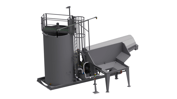
In this area, CIFA offers CIFA WASH, a concrete recycling system that recovers aggregates and water from the washing of truck mixers and pumps. Depending on the model, the manufacturer states a concrete recycling capacity of 11-25 m³/h, a slurry water treatment capacity of 30-100 m³/h and a production range of 15-30 m³/h.

The CIFA recycling range also includes AQUATECH, offered as an alternative system. For its specific performance, refer to the official technical documentation.


Organising the process and, when needed, involving CIFA

To define an adequate cleaning process, you need to assess:

  • The characteristics of the trucks (drum size, washing equipment already fitted).

  • How intensively they are used and how many loading and discharge cycles they run each day.

  • The space available for washing, on site and at the plant, and for collecting the water.

  • The residue collection and treatment systems already installed or still to be installed.

  • Internal procedures (who does what, with which PPE and which documentation) and the real skills of the operators involved, especially for work that requires entering the drum.

On the product side, some design features have a direct effect on how easy and safe washing is.

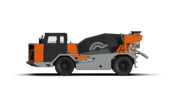
CIFA RY series truck mixers, for example, have a drum locking system for maintenance work built in as standard. This is consistent with the instruction, found in both sources, always to stop the drum with mechanical locks before any work. They also have a water pump with a quick coupling on both sides for rinsing.

For monitoring, CIFA Vista provides operating data for the fleet (usage, diagnostics, history) that can support maintenance planning, including the more demanding cleaning tasks, on top of the periodic checks already required.

For operator training, CIFA Academy offers technical training courses on using the machines, including one dedicated to truck mixers with the CSD system. At present there is no course specifically on cleaning inside the drum or on confined-space work. To assess your team's training needs on this specific subject, contact CIFA directly, who can indicate the courses available or that can be arranged.

If your company wants to review how it cleans its fleet and manages the water, from machine features to treatment systems:

Contact the CIFA team


FAQ

Frequently asked questions

  • How do you clean the drum of a truck mixer?

    In two separate stages. At the end of discharge on site, the outer parts (chute and tyres) are cleaned in an area equipped with water collection. The internal wash of the drum, feeding in water while it rotates to dilute the residual slurry, takes place at the end of the day at the plant. It is followed by washing the outside of the hopper, drum and chute.

  • When does cleaning inside the drum become confined-space work?

    When the work requires a person to physically enter the drum. In that case the confined-space rules apply: qualified, trained and instructed personnel under D.P.R. 177/2011, procedures for locking the truck and the drum, maximum stay times, an outside operator always present and continuous communication.

  • Who can remove hardened concrete from the drum?

    Only if the manufacturer expressly provides for the operation in the machine's Use and Maintenance Manual, and only qualified, trained and instructed personnel, including the driver if they meet these requirements. The machine's own manual describes it as an extremely dangerous operation even when the safety measures are followed. 

  • How should truck mixer wash water be managed?

    It must not be allowed to run onto the ground or into watercourses. It must be collected and treated in accordance with D.Lgs. 152/2006, with solids separation, settlement or filtration and, where appropriate, reuse of the clarified fraction. Whether residues count as waste must be checked case by case.

  • If wash water looks clear, is it already compliant for discharge or reuse?

    No. Appearance is not a measure of compliance. Whether water is suitable for discharge or reuse depends on specific technical parameters and must be checked against the regulations and, where there is one, the treatment system installed. 

Subscribe to the newsletter