
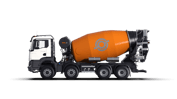
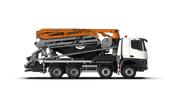
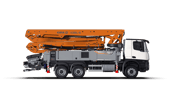
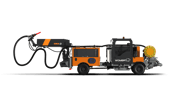
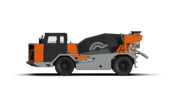
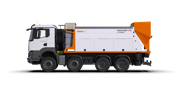
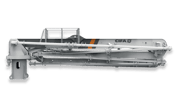
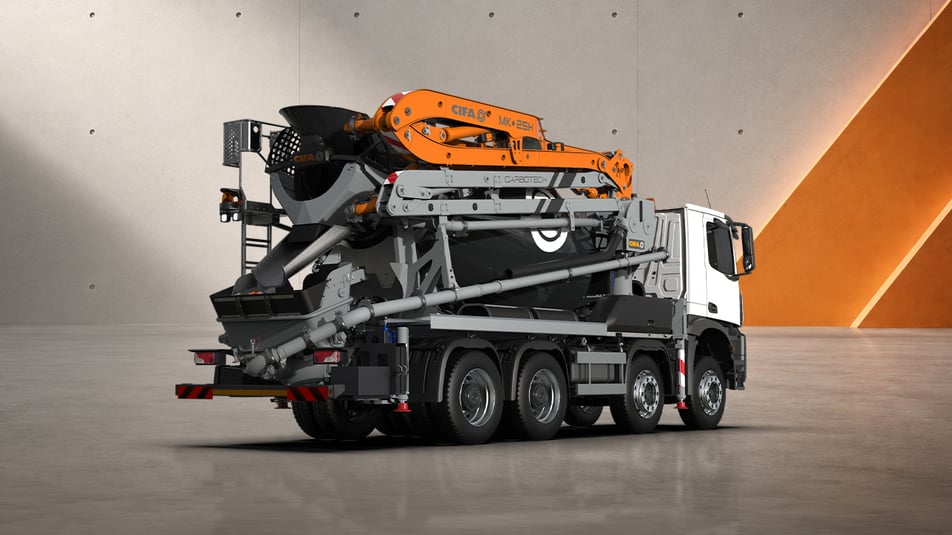
An 8 m³ slab in a narrow town-centre street can be poured in two ways: using two vehicles, a truck-mounted concrete pump and the truck mixer supplying it, or a single truck mixer pump.
The deciding factors are how many vehicles the jobsite can accommodate, how much concrete is actually needed and how the working day is organised between pours.
Here we compare truck mixer pumps, truck-mounted concrete pumps and trailer pumps against the criteria that matter on the jobsite. We explain where a truck mixer pump is most effective, when another solution makes more sense and what CIFA offers.
Truck mixer pump, truck-mounted concrete pump or trailer pump: what changes on the jobsite?
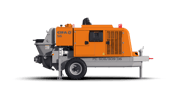
A truck mixer pump carries and pumps concrete from the same truck chassis. A truck-mounted concrete pump is dedicated to pumping and receives concrete from truck mixers. A trailer pump remains in a fixed position and pushes concrete through a pipeline.
The main difference is in the logistics.
| Aspect | Truck mixer pump | Truck-mounted concrete pump | Trailer pump |
| Vehicles on site | One vehicle that carries and pumps concrete | The pump and a steady succession of one or more truck mixers | The pump, truck mixers and pipeline |
| Concrete supply | The machine’s own drum | Truck mixers | Truck mixers |
| Concrete placement |
On-board boom | On-board boom (including very long booms) | Ground- or wall-mounted pipeline (no on-board boom) |
| Pour continuity |
Limited by drum capacity | Maintained by a steady succession of truck mixers | Maintained by a steady succession of truck mixers |
| Space required |
One vehicle to set up on stabilisers | Pump set up on stabilisers, plus manoeuvring space for truck mixers | Compact machine, plus space to lay the pipeline |
With a truck mixer pump, the pour stops when the drum is empty. With a truck-mounted concrete pump, continuity depends on truck mixer arrivals. This is an advantage for large volumes, but adds cost on smaller pours, as more vehicles and people are needed for just a few cubic metres.
(The other two solutions are covered in more detail in our articles on truck-mounted concrete pumps and trailer pumps.)
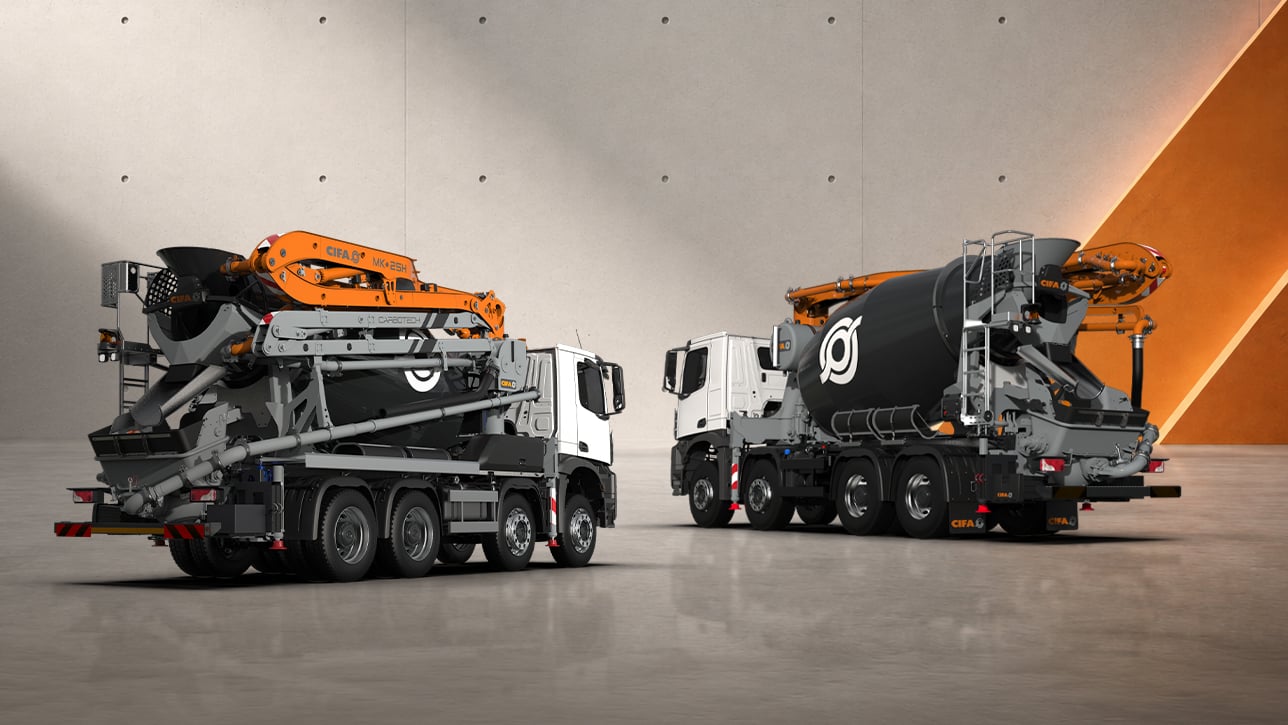
How a truck mixer pump works: capacity, chassis and pumping output
A CIFA truck mixer pump carries 7 or 9 m³ of concrete, depending on the drum fitted. This determines which jobs can be completed in a single trip.
For a slab, an edge beam, a foundation or a flight of stairs, 7-9 m³ is often enough to complete the entire job: the machine arrives, pours and leaves. If more concrete is needed, it must return to the batching plant for another load. Each reload takes time and interrupts the pour, making it worth reconsidering the logistics and assessing an alternative such as a truck-mounted concrete pump.
Drum size is constrained by the fact that the entire assembly shares the same truck chassis: the drum, concrete, wash water, pumping unit and boom. The total weight must remain within both the vehicle’s technical limits and the legal weight limits in the country of operation. Drum capacity, boom length and the number of chassis axles therefore need to be selected together.
When to choose a truck mixer pump: the jobsites where it works best
A truck mixer pump is particularly useful under the following jobsite conditions.
Tight spaces and urban jobsites
In a historic town centre, a courtyard or a street that can only be closed briefly, a truck mixer pump takes up the space of a single vehicle. With the concrete already on board, there is no need to reserve a waiting or manoeuvring area for a truck mixer supplying the pump.
In these situations, two key boom parameters need to be assessed: the height required for unfolding and the number of sections. The first determines whether the boom can be used beneath overhead lines or in an enclosed courtyard, while the second determines how much freedom there is to manoeuvre around obstacles.
Small and medium-sized pours
For a residential floor slab, an edge beam or a small raft foundation, sending a truck-mounted concrete pump and a truck mixer means committing two vehicles and two operators (the driver and the pump operator) for just a few cubic metres. A truck mixer pump completes the pour with one load, one vehicle and one operator.
Several jobsites in one day
For operators serving several small jobsites, reducing downtime between pours matters. A single vehicle means only one vehicle to move and set up, with no need to wait for truck mixers to arrive at each jobsite.
When another solution makes more sense
Good technical advice also identifies when other machines are a better fit. There are three main cases:
-
Large, continuous pours: a large raft foundation or an industrial floor slab requires substantial volumes of concrete without interruption. A truck-mounted concrete pump supplied by a steady succession of truck mixers delivers productivity that a 7-9 m³ drum cannot match.
-
Heights and distances beyond the boom’s reach: when the placing point is higher or further away than a truck mixer pump’s maximum reach, a truck-mounted concrete pump with a longer boom is essential.
-
Fixed jobsites and industrial applications: where the machine stays in one position and feeds a pipeline, whether on a large jobsite or in a complex urban setting, a trailer pump is the solution.
The right choice always starts with an assessment of the jobsite and the requirements of the pour, before considering a machine model.

How to choose a truck mixer pump: boom, drum, chassis and controls
Once a truck mixer pump has been identified as the right solution, its configuration is based on four parameters.
1. Boom length and number of sections
A longer boom reduces the need to reposition the vehicle, while more sections make it easier to manoeuvre around obstacles. In practice, the boom should be sized for typical pours rather than exceptional ones. A height reached once a year does not justify buying a longer, heavier vehicle to manage every day.
2. Steel or carbon fibre (Carbotech)
The material used for the sections affects the weight of the boom and therefore the remaining payload available on the chassis. The choice is between high-strength steel and carbon fibre.
3. Drum, chassis and dimensions
The drum is sized for the average pour volume, while chassis selection depends on the drum, boom and jobsite access. Overall length and road dimensions depend on the truck chassis. A 3-axle truck mixer pump is easier to manoeuvre through tight entrances, but the chassis must always be checked against its approved weight limits with the drum fully loaded.
4. Pumping unit and control system
Pumping units can have an open-loop or closed-loop hydraulic circuit. The electronic control system manages adjustments, diagnostics and stabilisation to prevent overturning, while displaying drum rotation and pumping cycles to the operator. The more advanced the system, the fewer manual adjustments are needed during the pour.
CIFA truck mixer pumps: Magnum, Carbotech and Steeltech
CIFA invented the truck mixer pump in 1974 with the first Magnum. Today, the range offers booms from 24 to 35 metres, with 3 or 4 sections, paired with 7 or 9 m³ drums. The final letter in the model name identifies the series: H for Carbotech (with a carbon fibre boom) and L for Steeltech (with a high-strength steel boom).
The MK35H, the top model in the Carbotech series, unfolds its 35-metre boom with a height clearance of just 8.3 metres, a decisive factor for work beneath overhead lines or inside industrial buildings and courtyards. It carries a 9 m³ drum on the same 8x4 chassis as the 32-metre version and is equipped with the PB908L pumping unit, with an output of up to 90 m³/h. Magnum truck mixer pumps can be mounted on any truck brand, and the most compact configuration in the range has a 24-metre, 3-section boom.
Depending on the configuration, control is provided by Easytronic (with an open-loop pumping unit) or Smartronic (with a closed-loop pumping unit). The CSD (Constant Speed Drive) system keeps drum rotation speed constant during road travel, regardless of changes in engine speed.
You can find the full technical details on the control systems page and the complete list of models in the CIFA Magnum truck mixer pump range.
Frequently asked questions
-
How does a truck mixer pump work?
It loads concrete at the batching plant and transports it, keeping it mixed in the rotating drum. Once set up on its stabilisers at the jobsite, it discharges the material into the pumping unit’s hopper. The pumping unit then pushes the concrete through the boom pipeline to the placing point. The operator controls all movements using a radio remote control.
-
How many cubic metres can a truck mixer pump carry?
CIFA truck mixer pumps have drums with a nominal capacity of 7 or 9 m³. The 9 m³ drum is available on models mounted on a 4-axle chassis. -
What is the difference between a truck mixer pump and a truck-mounted concrete pump?
A truck-mounted concrete pump is dedicated to pumping and must be supplied by one or more truck mixers. A truck mixer pump combines the mixer and pump on a single vehicle and can work independently, although its boom is generally shorter than those of large truck-mounted concrete pumps. -
How long is a truck mixer pump boom?
Booms in the CIFA Magnum range extend from 24 to 35 metres and have 3 or 4 sections. The MK35H’s 35-metre boom is made of carbon fibre to keep weight down. -
What determines the cost of a truck mixer pump?
It depends on the configuration: boom length and material, drum capacity, pumping unit output, control system and truck chassis. More than the purchase price alone, however, what matters is the total cost of ownership (TCO), covering fuel consumption, wear, maintenance and reduced downtime throughout the vehicle’s service life. -
How do you choose the right solution for your jobsite?
Whether you choose a truck mixer pump, a truck-mounted concrete pump or a trailer pump, the best option depends on concrete volumes, available space and how pours are organised. The CIFA team can help you assess these parameters and configure the vehicle best suited to your typical jobsite.
For a technical comparison of the models, book a consultation with one of our experts.