






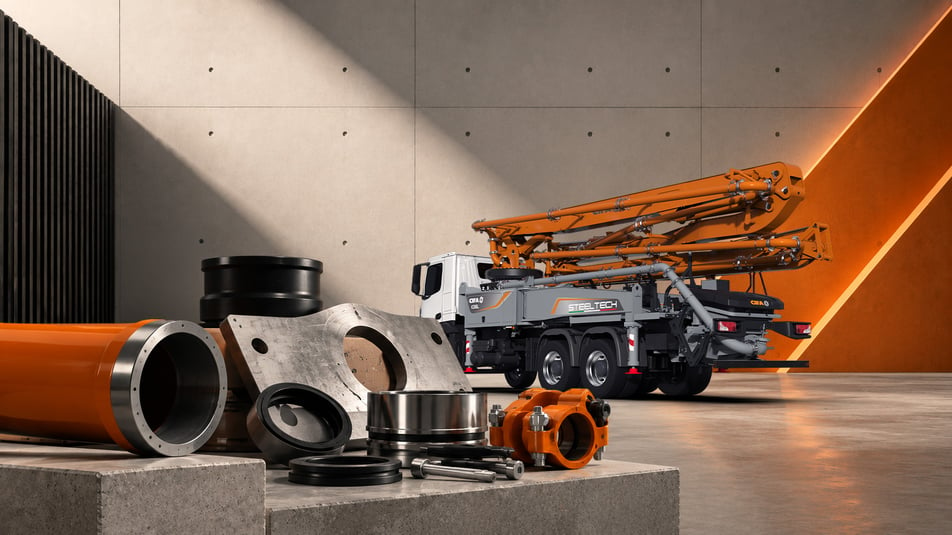
An unplanned pump downtime is never just a technical problem: it is a planning problem. Knowing which spare parts to keep in stock, and why, makes the difference between a repair that takes a few hours and a jobsite that stands idle for days.
Why preventive spare parts stocking is a strategic choice
The spare parts for truck-mounted concrete pumps that have the greatest impact on jobsite continuity are those for the pumping unit and the pipelines, the components most exposed to concrete flowing under pressure.
Having them on hand before they fail turns a breakdown into a scheduled replacement, instead of a wait that brings the pour to a halt.
The right stock level depends on how intensively the machine is used and on the type of concrete pumped. With frequent pours, wear plates and pumping pistons wear out faster than with occasional use, and the parts list should be tailored accordingly.
Reducing direct and indirect costs
An unplanned downtime of a truck-mounted concrete pump results in direct cost, the lost of productivity, and indirect cost, often harder to quantify but no less significant:
-
Delays in project delivery
-
Crew rescheduling
-
Contractual penalties
-
Rental costs for a replacement machine
-
The impact on the scheduling of subsequent pours and on the relationship with the client
While the direct cost end as soon as the machine restarts, the indirect costs can have lasting consequences.
A well-managed spare parts inventory can significantly reduce these indirect costs.
The importance of original spare parts
Having the critical component on hand is only useful if the part that gets fitted is the right one. The original spare part is designed by the same engineers who developed the machine and is validated against the design tolerances of the series-production component.
A compatible part may have the same shape but a different alloy, heat treatment or pressure resistance. As a result, it risks failing sooner, bringing the jobsite back to the original problem.
What determines actual spare parts requirements
There is no one-size-fits-all stock list. Requirements depend on three main variables:
-
Intensity of use: the number of pours per day and the actual pumping hours;
-
Type of concrete pumped: more abrasive mixes, or those with sharp-edged aggregates, accelerate the wear of components in direct contact with the flow;
-
Machine configuration: pipeline length and geometry, boom type, and the type of pumping unit installed.
A machine used for daily pours with abrasive concrete requires tighter stock rotation than one used occasionally with standard mixes. A later section explains how to turn this logic into an informed choice of spare parts.
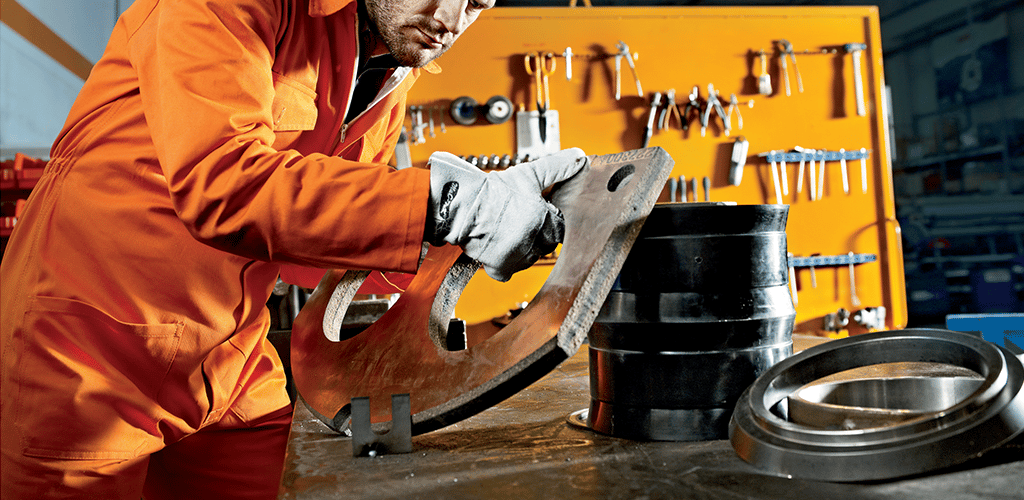
Which components to cover and how to evaluate original versus compatible parts
On the S valve, the pumping cylinders and the seals, where everything operates under high pressure, choosing parts built to original tolerances has three practical benefits:
-
Longer service life: non-original components wear faster in contact with concrete.
-
Reliability under pressure: a component validated on the test bench leaves no room for doubt.
-
Resale value of the machine: a certified maintenance history with original components helps the machine hold its resale value.
Pumping unit: the parts that are replaced most often
The pumping unit is the most heavily stressed part of the machine. Wear plates, wear rings, pumping pistons and S valves are the components with the shortest replacement cycle:
Wear plates and wear rings
S valve
Made from special alloys to limit wear, it tends not to give gradual warning signs. Its deterioration often shows up as a sudden drop in pumping regularity.
Pumping pistons
They seal the concrete cylinders off from the piston cylinders (where the hydraulic oil circulates). If a piston loses its seal, concrete can contaminate the hydraulic system, potentially causing serious damage to the hydraulic components downstream.
Pipelines for truck-mounted concrete pumps: pipes, bends and couplings
Wear along the pipeline varies with the type of pipe, the point where the flow changes direction and the type of connection. CIFA offers standard, hardened and long-life pipelines to match different intensities of use.
Pipeline selection guide
| Component |
Benefit | Context of use |
| Double-wall pipes and cast bends | Maximum wear resistance at the points where the flow changes direction | Jobsites with intensive pumping and several pours per day |
| Standard single-wall pipes | Replacement cycle already long enough for lighter-duty use | Occasional or low-intensity use |
In addition to the pipes and bends in the table, there are the connecting components and the flexible sections:
-
Couplings: they join the sections and keep the line sealed. Visible leaks and abnormal vibration indicate that replacement is needed. A non-original coupling can cause invisible micro-leaks that compromise operating pressure.
-
Rubber hoses: they complete the line in the final sections and during discharge, where flexibility matters more than abrasion resistance.
Seals for truck-mounted concrete pumps: replacement frequency and warning signs
Seals are used in the pneumatic and hydraulic circuits distributed across both the pumping unit and the pipeline, which is why they are among the components that may require frequent replacement
Original CIFA seals are validated on the test bench before they go into production, a step that reduces premature leaks in precisely these circuits.
The signs that indicate the need for immediate replacement are:
-
Oil or hydraulic fluid leaks
-
A drop in operating pressure
-
Abnormal system noise
Seal kits: the “jobsite saver” spare part to always have on hand
A complete kit in stock shortens repair times as soon as one of the signs above appears, at a purchase cost that is modest compared with the downtime it prevents.
Hopper outlet kit and accessories: the parts that are often forgotten
Some components are often overlooked because they are less visible, even though they wear at a regular rate.
The hopper outlet kit falls into this category. Sitting at the junction between the hopper and the pumping circuit, it is stressed on every pumping cycle, and its replacement interval should be monitored just like that of the components already described.
Pipeline supports and accessories are also easily overlooked: they keep the pipes correctly positioned along the boom. Improperly supported pipes can place additional stress on bends and couplings, accelerating wear regardless of the quality of the components installed.
Original CIFA spare parts versus aftermarket or compatible parts: what really changes
The difference between an original part and an aftermarket one is not always visible: the shape may be identical, but the materials and validation processes can differ significantly. Choosing the original part means ensuring design performance and preserving the machine’s resale value over time.
How to choose spare parts based on the type of concrete pumped
The type of concrete is one of the most direct criteria for tailoring stock:
-
Abrasive concrete (sharp-edged aggregates, high percentages of coarse sand) accelerates the wear of wear plates, rings and pumping pistons, so these components should be restocked more often.
-
Concrete with aggressive admixtures or fibers increases the stress on seals and the S valve, which should be monitored more frequently.
-
For frequent, continuous pours, double-wall pipes and cast bendsare worth the higher purchase cost because they extend the reorder interval.
-
For occasional use with standard mixes, single-wall pipes and longer replacement cycles remain a sensible choice, and longer replacement cycles avoid overstocking.
The goal is not “the most durable component in absolute terms,” but the one sized for the machine’s actual use.
How to order original CIFA spare parts and where to find them
Original CIFA spare parts are available at workshops in the Orange Check network, which also supply original pipelines, whether standard, hardened or long-life, on dedicated terms compared with buying a single component.
The Orange Check network is also the go-to channel for preventive diagnostics: a technician can check the actual wear condition of critical components before a warning sign turns into machine downtime.
CIFA scheduled maintenance: how to plan replacements and avoid unexpected downtime
Scheduled maintenance works alongside in-house spare parts management and helps organize service work and spare parts procurement, reducing the need to keep a large stock in the warehouse.
For the hydraulic system and for components subject to routine maintenance, service work can be planned based on actual working hours, following the guidance of the CIFA Technical Department.
For components in contact with concrete, on the other hand, machine hours and cubic meters pumped are useful indicators for guiding inspections, but they must be backed by a direct check of the condition of the components. Wear can vary considerably depending on the type of concrete used, so replacements should be based on the actual condition found at inspection.
CIFA Vista, the remote fleet monitoring system, supports maintenance planning by providing machine operating data, including working hours and the volume of concrete pumped. This information helps schedule routine maintenance and identify when concrete-contact components should be inspected, as direct inspection remains essential to assess their actual condition.
The next step
Determining the right spare parts inventory for your truck-mounted concrete pump requires considering operating intensity, the type of concrete being pumped and machine configuration. A technician from the Orange Check network can analyze this data and propose a stock list, or a scheduled maintenance contract, tailored to your specific jobsite.
Frequently asked questions
-
What is the difference between original and aftermarket spare parts for truck-mounted concrete pumps?
Original spare parts are designed by the same engineers who developed the machine and validated against the tolerances of the series-production component. An aftermarket part may not meet these specifications, which can lead to accelerated wear and a lower resale value for the machine.
-
How often should pumping pistons be replaced?
It depends on the type and consistency of the concrete pumped, the operating pressure and how intensively the machine is used. Regular inspections and monitoring of wear, flow rate and sealing efficiency are essential for determining when pumping pistons need to be replaced. -
Which spare parts for a truck-mounted concrete pump should always be kept in stock?
At a minimum: a seal kit, spare pumping pistons, a section of pipeline (preferably double-wall), spare couplings and cast bends. These are the components with the shortest replacement cycle.
-
Where can I buy original CIFA spare parts for truck-mounted concrete pumps?
At authorized workshops in the Orange Check network, which also offer original standard, hardened and long-life pipelines on dedicated terms. -
Does scheduled maintenance replace in-house spare parts management?
No, it works alongside it. It plans replacements on the basis of the machine’s actual working hours, reducing both the risk of unexpected downtime and the need to hold large quantities of spare parts in stock.