

Mobile Concrete Pumps: Differences Among Models

Back

In the construction industry, the choice of concrete pumping system depends on the machine’s production capacity and operational variables such as job site logistics, accessibility of the work area, pumping distance, and operational continuity.In this context, mobile or stationary pumps offer an extremely flexible solution.


Parameters to evaluate before choosing a mobile concrete pump

For a construction business owner, the choice of machine should not be based solely on the declared theoretical output, but on a series of factors that have a real impact on performance:

  • Pumping distance and height
  • Type of concrete used
  • Configuration of the pipeline system
  • Continuity of the work cycle
  • Jobsite accessibility
  • Intensity of machine use

Evaluating these elements makes it possible to size the pumping system correctly and avoid choices based only on theoretical values.


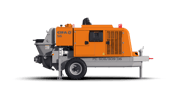
Structure of a mobile concrete pump

A mobile concrete pump mainly consists of:

  • Pumping unit
  • Concrete receiving hopper
  • Delivery valve (S-valve)
  • Pumping cylinders and pistons
  • Hydraulic system
  • Independent diesel or electric motor
  • Control system and operator panel
  • Towable chassis with stabilization

The pumping unit directly determines the machine’s performance in terms of output, pressure, and flow continuity. The system uses two cylinders working alternately, controlled by the S-valve, ensuring a constant delivery of concrete even with long lines, load variations, and materials with different characteristics.


Types of mobile concrete pumps and selection criteria

The different types of mobile concrete pumps are distinguished by specific technical and operational characteristics that must be evaluated according to the type of jobsite and working conditions.


Production capacity

Mobile concrete pumps are distinguished by hourly output (m³/h), which identifies the machine type and its application range.

Low output
  • Range: 2–30 m³/h

Applications: small jobsites, renovations, shotcrete

Intermediate output
  • Range: 50–60 m³/h
Applications: residential and commercial construction
High output
  • Range: 70–90 m³/h
Applications: large pours, infrastructure, continuous work


Pumping pressure

Concrete pressure (bar) distinguishes machines based on their ability to work over distance and height.

Medium pressure
  • Range: 57–70 bar
  • Use: standard jobsites, shorter distances
High pressure
  • Range: 80–140 bar
  • Use: long distances, complex lines, vertical jobsites

Pumping Unit

Mobile concrete pumps use pumping units with two configurations that affect performance and operation.
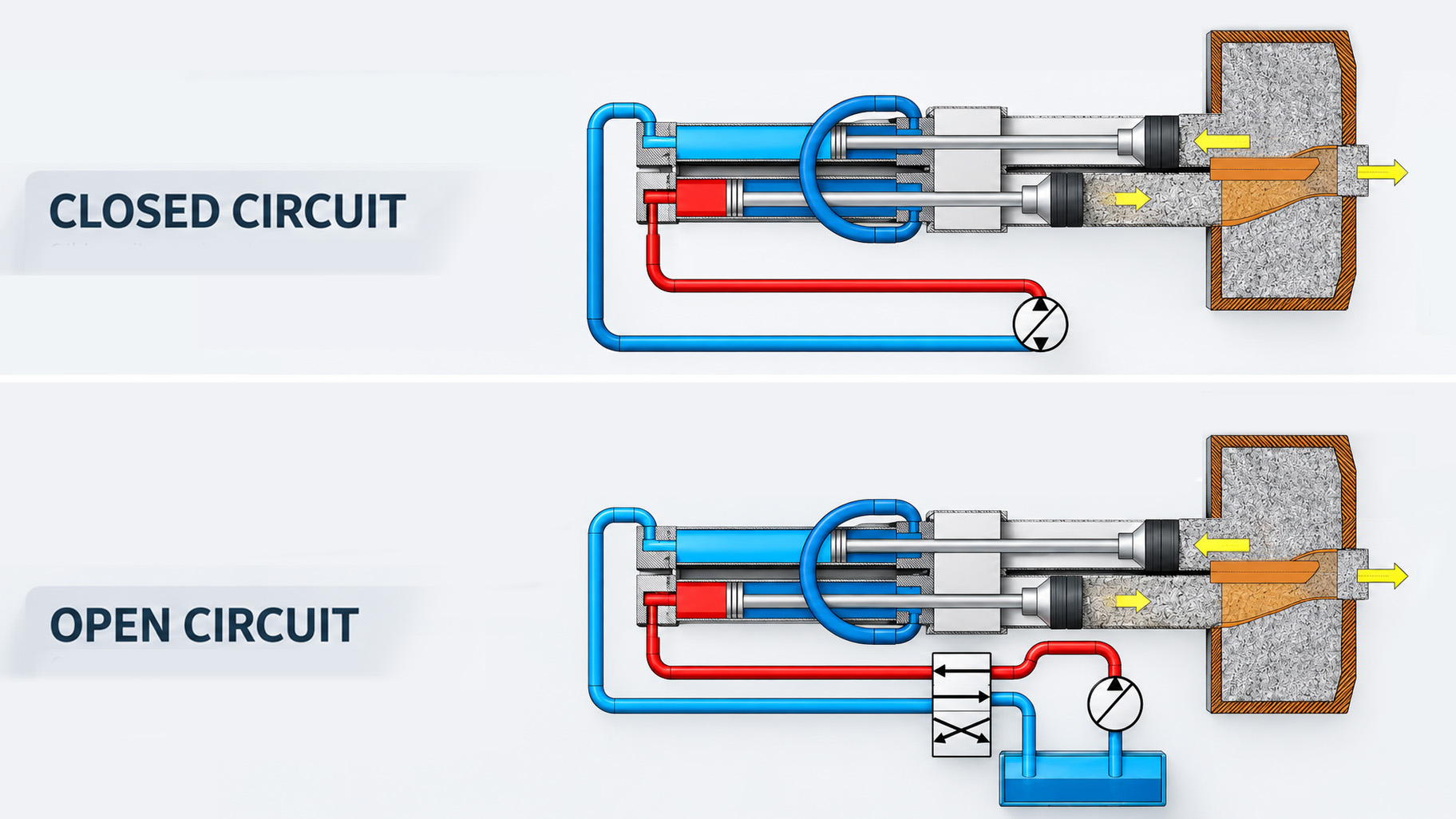
circuito chiuso-aperto

  • Open circuit (open loop)
    • Hydraulic control
    • Greater simplicity and faster maintenance
  • Closed circuit (closed loop)
    • Electronic control
    • Greater efficiency and more stable flow


Power type

The power unit distinguishes pumps according to the operating context.

Diesel
  • Use: jobsites without access to electrical power
  • Advantages: autonomy and flexibility
Electric
  • Use: enclosed environments, tunnels, urban areas
  • Advantages: reduced emissions and lower noise levels

Chassis Configuration

The machine’s mobility defines additional operational types.
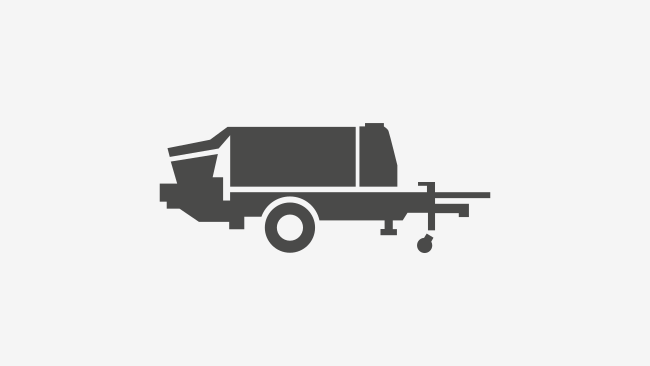


CIFA-ruote-suRuote-icon

On wheels

Road transport (only if road approved)
Jobsites that are not easily accessible
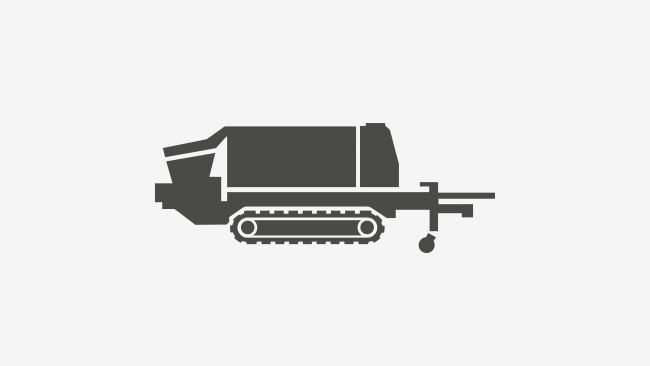
CIFA-cingoli-ruote-icon

Tracked

Use on difficult terrain

Dimensions and components of the pumping unit

Pumps differ in terms of:

  • Cylinder diameter and stroke
  • Hopper capacity (approximately 500–600 liters in standard configurations)
  • S-valve size (8"–10")

These parameters affect:

  • Flow continuity
  • The ability to handle different types of concrete
  • Wear resistance


Mobile pumps vs. truck-mounted pumps: operational differences

Both use the same pumping principle. The difference lies in the distribution system and jobsite logistics.

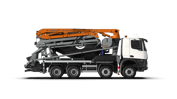
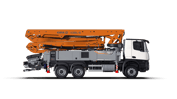
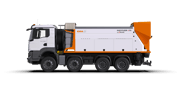
Truck-mounted pump

A truck-mounted pump integrates a pumping unit installed on a truck and a placing boom.

The machine is positioned on the jobsite, deploys its stabilizers, and pours concrete directly within the area covered by the boom.

It is the most efficient solution when fast pours, frequent mobility, and direct concrete distribution are required.

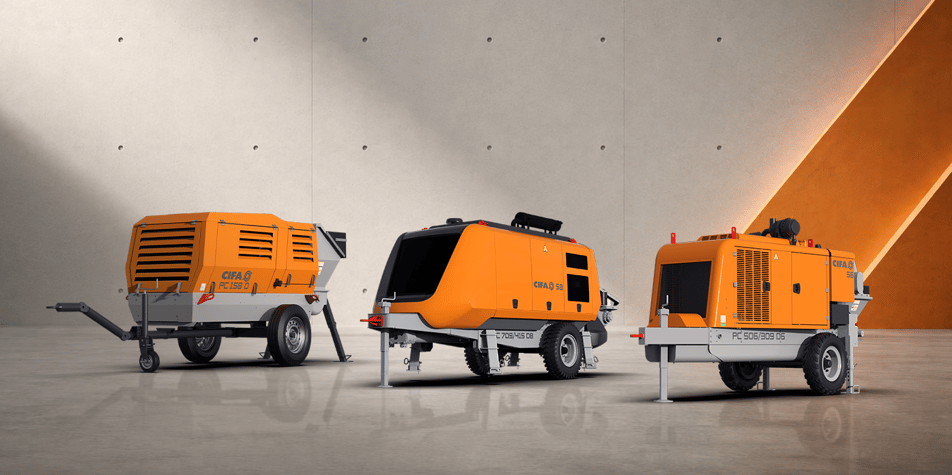
Mobile pump

A mobile pump is an independent pumping unit without a placing boom.

Concrete is pushed through pipeline lines or stationary booms, while the pump remains in a fixed position.

It is the most suitable configuration for pumping over long distances, to great heights, or on jobsites with a stable pumping line, such as multi-story buildings, tunnels, and infrastructure projects.


Integration with stationary booms and pumping lines

One of the most significant advantages of the stationary pump is the possibility of integrating it with modular distribution systems.

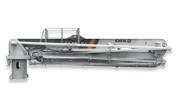
On many jobsites, this machine does not distribute concrete directly, but instead feeds a pumping line made up of pipelines and, when necessary, a stationary boom.

The pump remains installed in a fixed position while the distribution system is extended or reconfigured according to the progress of the jobsite.

This configuration makes it possible to maintain pumping continuity even over long distances or in the presence of significant vertical development of the structure.


When a mobile pump is the most efficient choice

From an operational standpoint, there are some situations in which a mobile pump proves particularly advantageous.

Limited-access jobsites

The compact dimensions make it possible to position the machine even in spaces where a truck-mounted pump could not operate.

Long-distance pumping

When concrete needs to be conveyed through pipelines over hundreds of meters, a mobile concrete pump is often the most efficient solution.

Jobsites with continuous pumping

When the pumping line remains installed for long periods, a mobile concrete pump helps reduce setup time and operating costs.

Tunnel or infrastructure work

In environments such as tunnels or large infrastructure projects, where maneuvering space is limited, these machines are particularly well suited.

The configuration of a mobile concrete pump makes it possible to adapt the pumping system to the specific conditions of the jobsite, ensuring performance aligned with operational requirements and the critical challenges to be managed.


FAQ

Frequently asked questions

  • What are the main causes of pressure loss?

    Line length, the number of bends, and pipe diameter directly affect pressure losses.
  • How can pipe blockages be prevented?

    Use suitable concrete, maintain pumping continuity, and configure the line correctly.
  • Which concrete is best suited for pumping?

    Mixes with controlled aggregate gradation, good workability, and an adequate fines content.
  • How does line length affect pumping?

    As the distance increases, the required pressure and the load on the machine also increase.
  • Which components are subject to the most wear?

    The S-valve, cylinders, wear plates, and wear rings.
  • Which mistakes should be avoided when configuring the line?

    Excessive bends, inconsistent diameters, and uncontrolled changes in the line layout.
  • What are the main operational risks?

    Machine overload, line blockages, and improper pressure management.

Subscribe to the newsletter