
Concrete Pumps and Truck Mixer Pumps: The Complete Guide

Back

On-site, concrete pumps and truck mixer pumps directly affect logistics, pouring times, operational continuity, and total cost of ownership.

From the choice of machine and its configuration, to the evaluation of the pumping unit, through to the management of service and spare parts, every decision has an impact on productivity.

This guide provides a complete overview of pumping solutions, with a focus on:

  1. Pumps and truck mixer pumps on the construction site: what they are and how they differ
  2. Main components of a concrete pump
  3. Pumping unit: the heart of the machine
  4. Placing boom and outriggers
  5. Electric solutions for concrete pumping
  6. On-site operational management: control and integration
  7. Maintenance and service: long-term operational continuity
  8. How to choose the most suitable concrete pump


1. Concrete Pumps and Truck Mixer Pumps On-Site: Types and Differences

In the concrete industry, various pumping solutions are available, designed to meet different operational needs in terms of space, height, distance, and productivity.

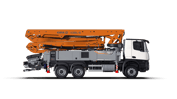
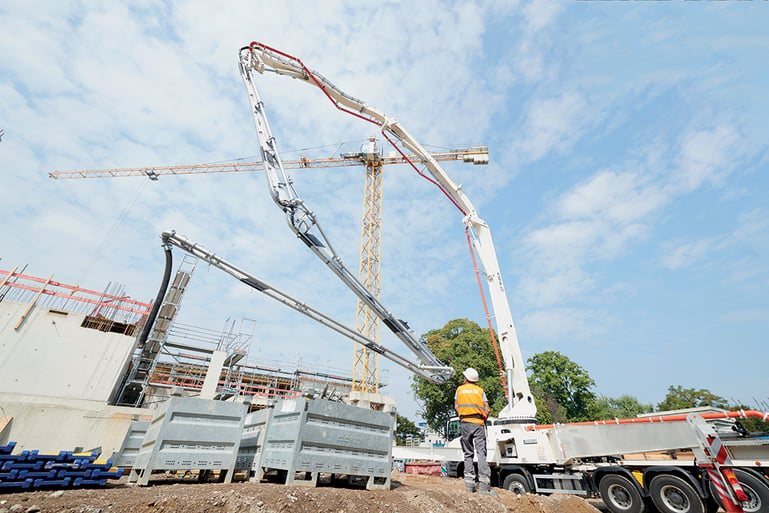
Truck pumps

Truck pumps are units mounted on a truck chassis, integrating:

  • Placing boom
  • Pumping unit
  • Front and rear outriggers
  • Control system

Choosing the right machine for concrete placement depends on several factors, such as pouring height, available space on site, chassis size, and boom configuration.

For this reason, it's important to understand in detail the characteristics of truck pumps and when to use them.

Copia di Pompe autocarrate CIFA (4)

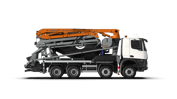
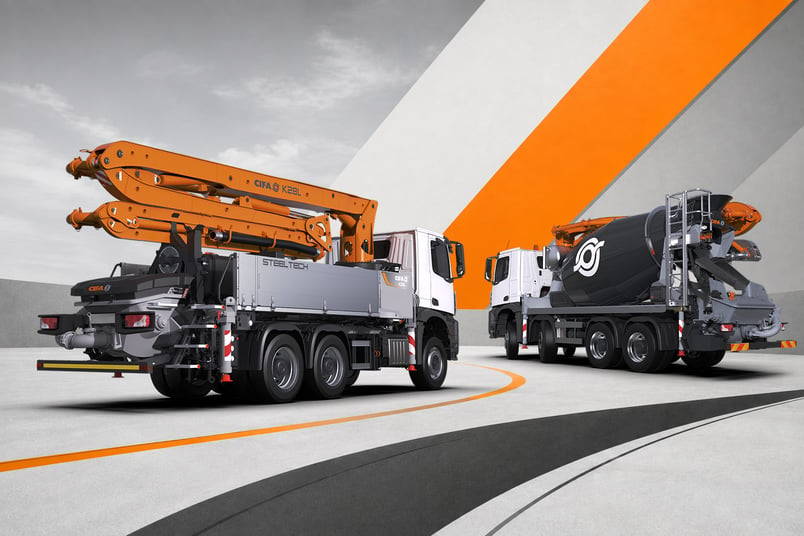
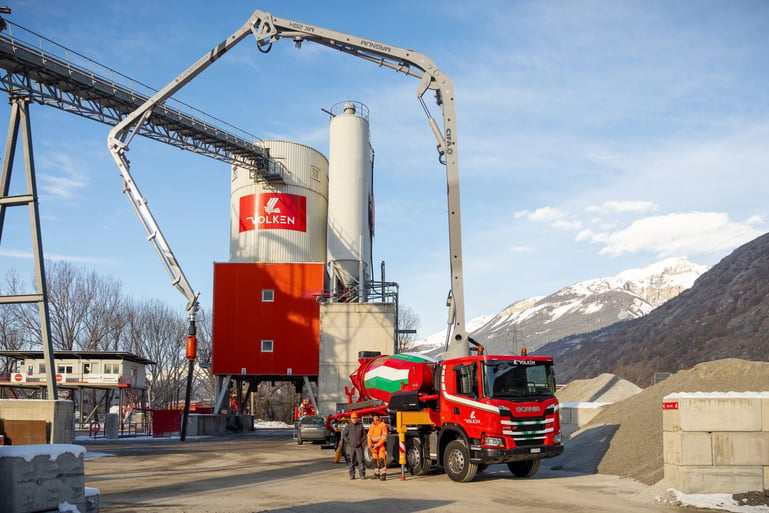
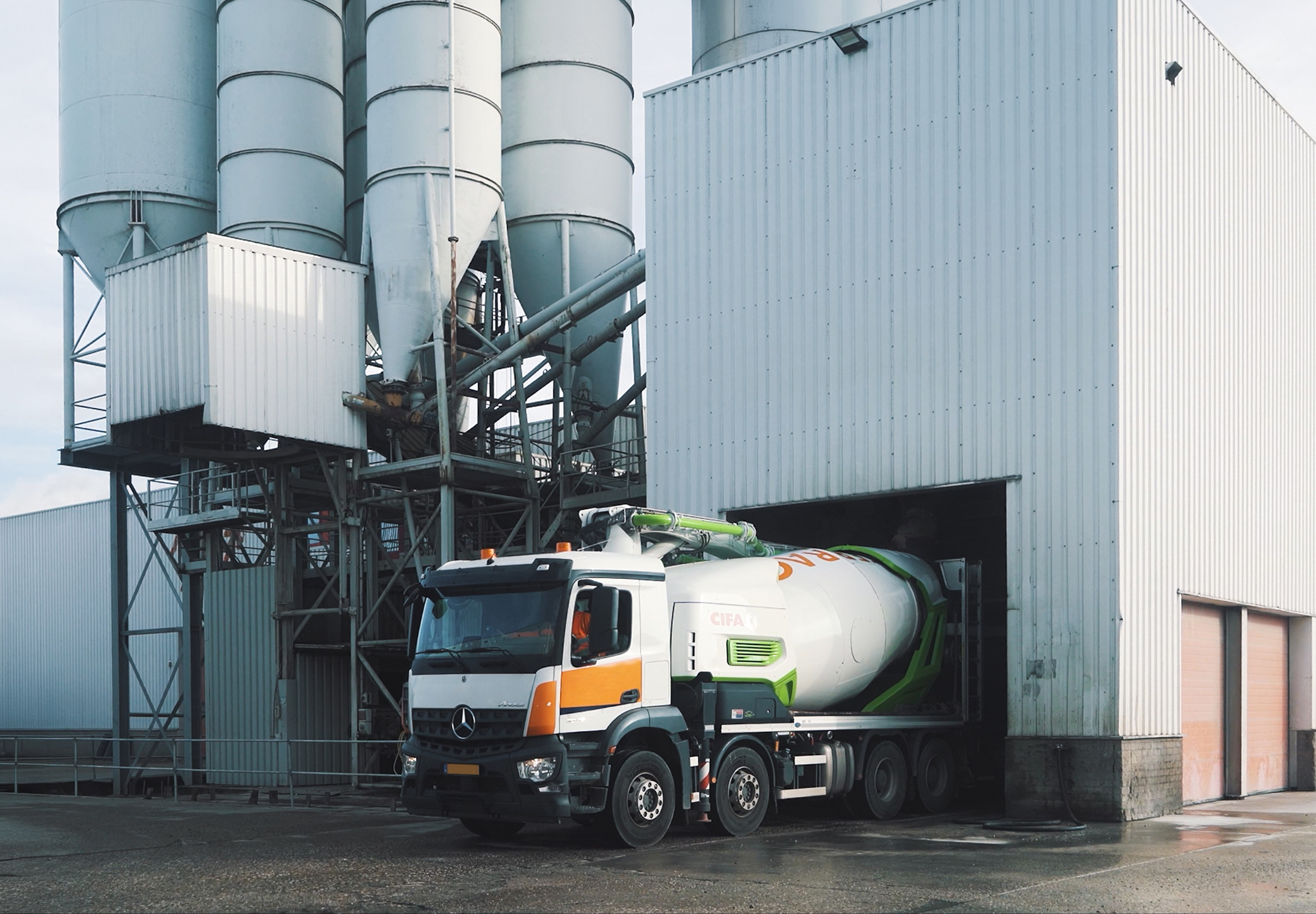
Truck mixer pump

The truck mixer pump combines a mixer truck and a pump in a single machine. It is particularly suitable for jobsites where:

  • - Space is limited;
  • Logistics are complex;
  • Greater operational autonomy is required.

On jobsites where space, pouring times, and logistics affect worksite organization, it is useful to understand the differences between a truck mixer pump and other pumping solutions, and when to choose it based on the type of project.
betonpompa

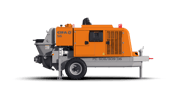
Trailer-mounted pumps

Trailer-mounted pumps, or stationary pumps, are pumping units installed on a towable chassis or skid. They are used when:

  • The pour requires long horizontal or vertical distances;
  • A boom is not necessary;
  • Work is being carried out on infrastructure jobsites or in tunnels.

When planning the jobsite, it is necessary to evaluate the differences between the various trailer-mounted concrete pumps and which configurations are best suited to the operating context.

Line pumps with electric control are often chosen to make the work more efficient.
CIFA macchine per calcestruzzo

2. Main components of a concrete pump

Regardless of the configuration, concrete pumps share a number of key structural elements:

  • Loading hopper;
  • Pumping cylinders;
  • Pistons;
  • S-valve for flow reversal;
  • Hydraulic circuit;
  • Electronic or hydraulic control system.

The correct sizing of these components directly affects output, pressure, and long-term reliability. 
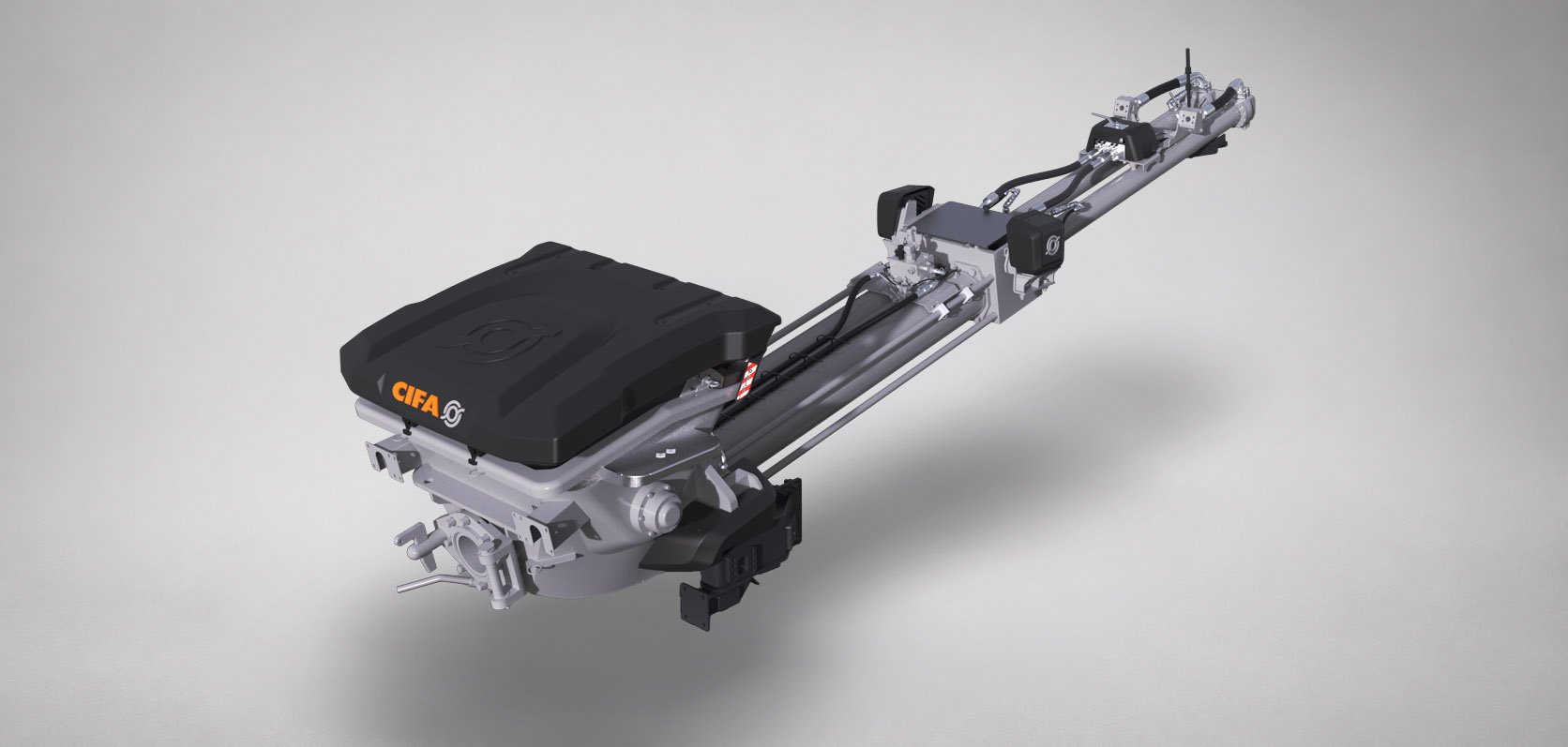
 

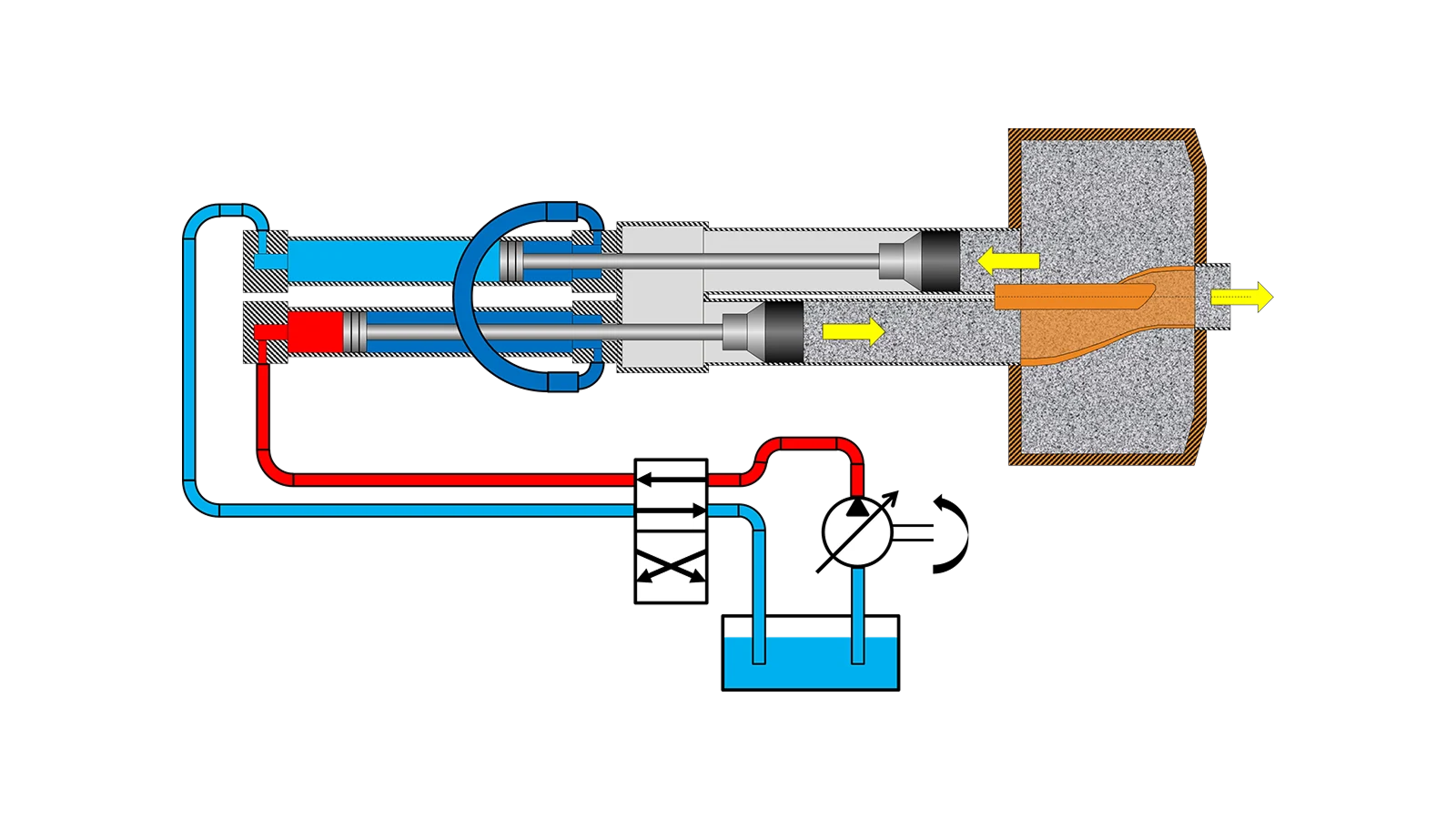
Gruppo Pompante


3. Pumping unit: the heart of the machine

The pumping unit is the component that generates the force needed to transfer the concrete from the hopper to the delivery pipeline.


How it works

The system is based on two cylinders that operate alternately:

  • One piston draws in the concrete;
  • The other pushes it into the delivery line;
  • The S-valve coordinates the flow between the two cylinders.

This alternating movement ensures pumping continuity and constant pressure.

Open circuit or closed circuit

Pumping units can be:

circuito-aperto

Open-circuit, with simpler hydraulic management
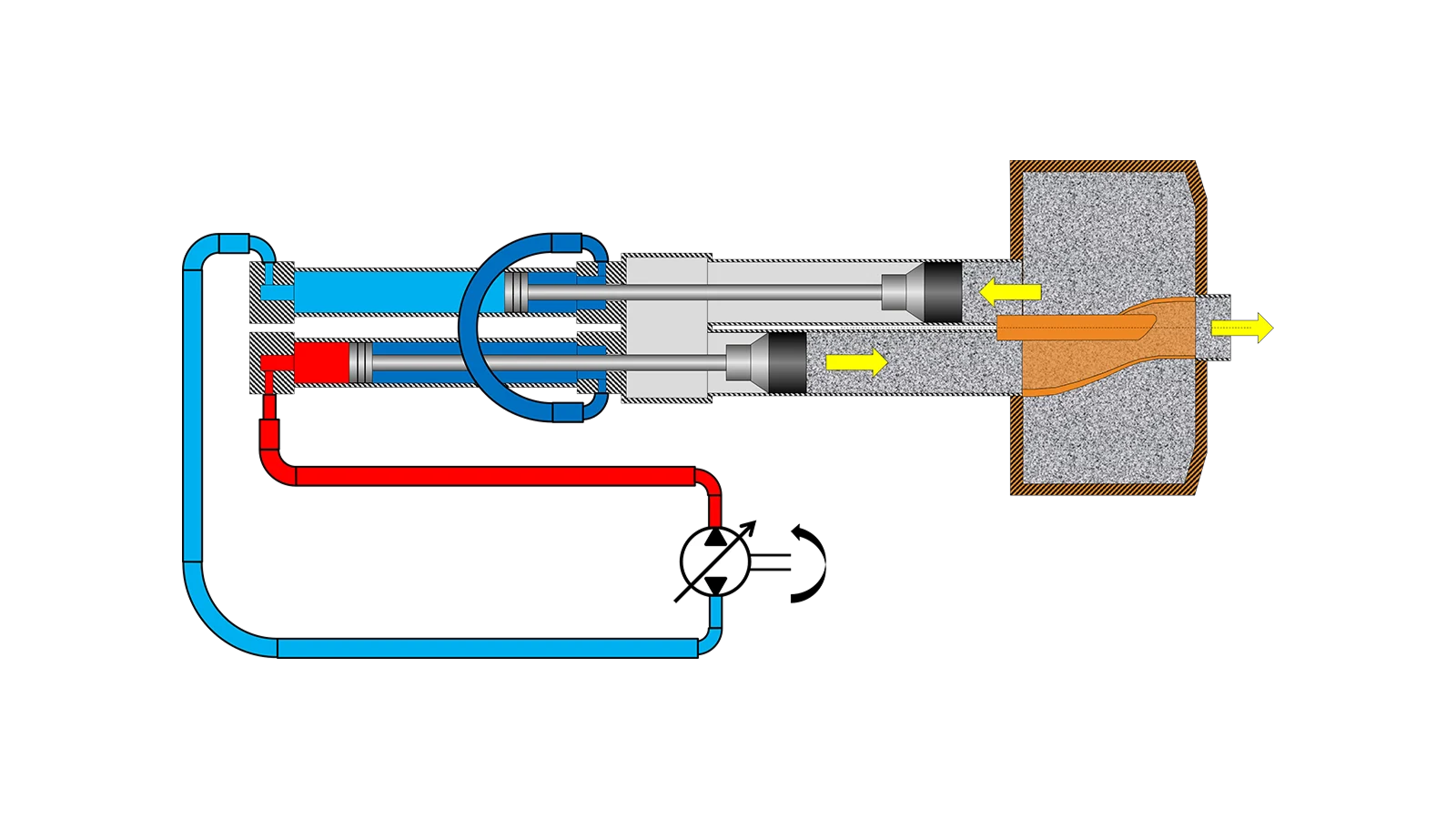
circuito-chiuso

Closed-circuit, with electronic control and greater efficiency

The differences affect:

  • Maximum pressure on the concrete;
  • Number of cycles per minute;
  • Energy efficiency;
  • Maintenance complexity.


Flow rate and actual productivity

The theoretical flow rate expressed in m³/hour does not always match actual on-site productivity.

The following variables directly affect the pump’s actual on-site performance:

  • Line length;
  • Pumping height;
  • Pipe diameter;
  • Type of concrete.

It is important to understand how to estimate the flow rate and actual productivity of a concrete pump in order to properly assess on-site performance.
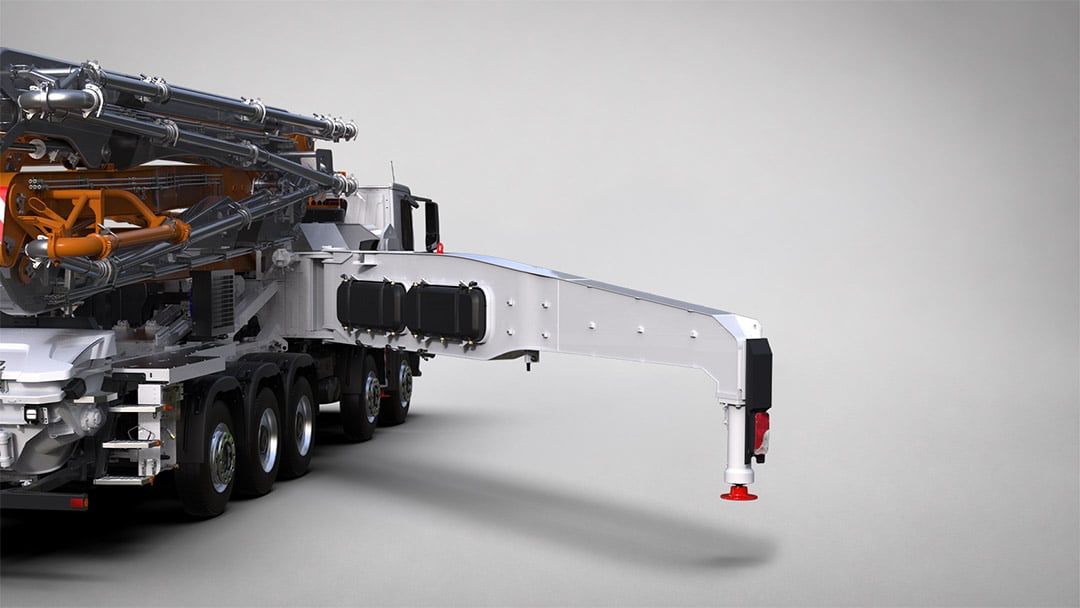
 

Stabilizzazione


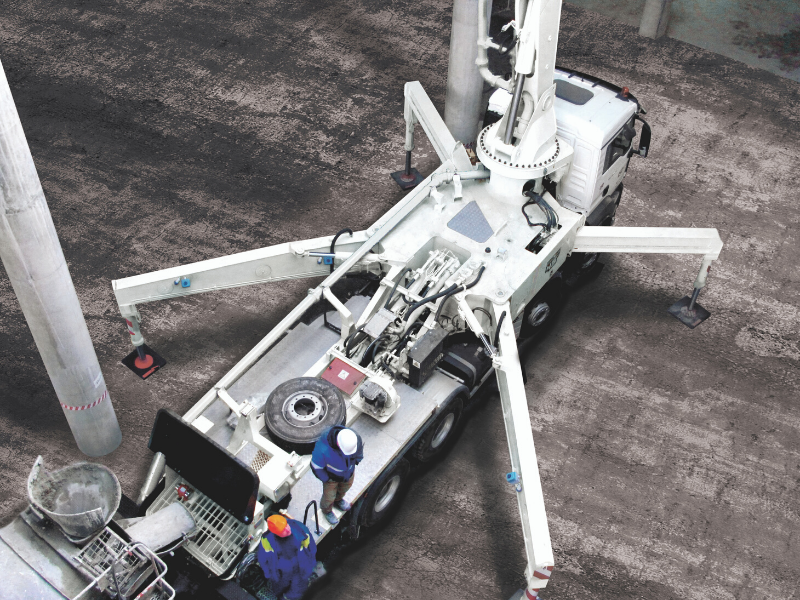
4. Placing boom and stabilization

In the case of truck-mounted pumps, the placing boom makes it possible to reach the pouring point with precision.


Boom configurations can vary in terms of:

  • Number of sections;
  • Type of opening;
  • Height and horizontal reach.

Outriggers ensure safety and proper load distribution during pumping.

The choice of configuration depends on:

  • Available space on the jobsite;
  • Structural constraints;
  • Pouring height and distance;
  • Truck dimensions.


5. Electric solutions in concrete pumping

Technological developments have introduced electric and hybrid solutions in concrete pumping, which are particularly advantageous in:

  • Urban jobsites;
  • Tunnels;
  • Areas with restrictions on emissions and noise.

The benefits include:

  • Reduced local emissions;
  • Lower noise levels;
  • Potential reduction in operating costs over the long term.

Understanding when it makes sense to use electric pumping is essential for choosing the configuration best suited to the working context.
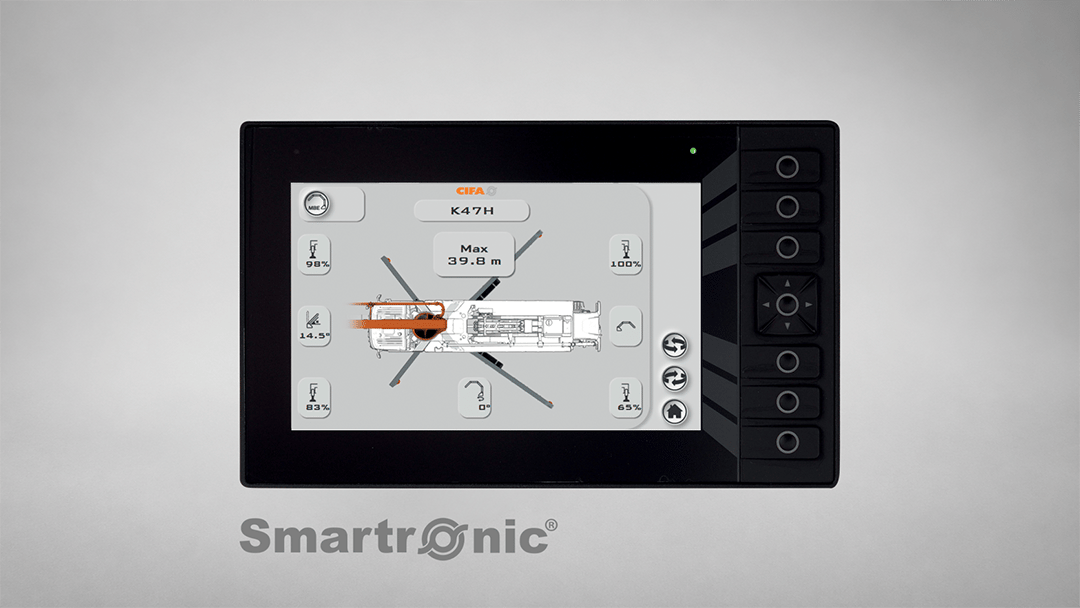
 

Smartronic


6. On-site operations management: control and integration  

The integration of digital management systems and electronic controls into truck-mounted pumps and other concrete pumping equipment makes it possible to increase on-site operational efficiency, safety, and productivity through constant monitoring of operating parameters.

Electronic machine control makes it possible to:

  • Monitor operating parameters;
  • Manage pumping speed and cycles;
  • Diagnose anomalies;
  • Reduce operating errors and accidents.

In addition, in the ready-mix context, electronic management of the mixer truck also plays a key role in optimizing the loading and unloading cycle.


7. Maintenance and service: long-term operational continuity 

For those who use these machines on-site, operational continuity is essential. A proper maintenance strategy reduces the risk of machine downtime and protects the value of the investment.


Cleaning and wear

Careful cleaning management, particularly of the mixer truck and the pumping unit, helps to:

  • Reduce component wear;
  • Prevent buildup and blockages;
  • Extend the machine’s service life.

Cleaning the mixer truck, the truck mixer pump, and every type of concrete pump is an operation that must be carried out regularly and carefully in order to maintain efficiency and operational continuity.
 

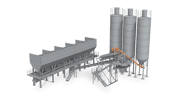
Impianti di Betonaggio

Cleaning and wear

Careful cleaning management, particularly of the mixer truck and the pumping unit, helps to:

  • Reduce component wear;
  • Prevent buildup and blockages;
  • Extend the machine’s service life.

Cleaning the mixer truck, the truck mixer pump, and every type of concrete pump is an operation that must be carried out regularly and carefully in order to maintain efficiency and operational continuity.

Pompe autocarrate CIFA

Spare parts for truck-mounted pumps

Some components are subject to normal wear and must be monitored:

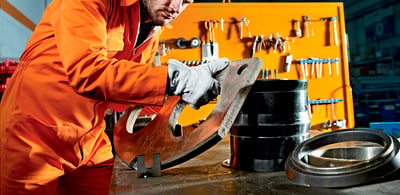
  • Wear plates and wear rings;
  • Piston seals;
  • S-valve components;
  • Elements of the pumping line.

Knowing which spare parts to keep in stock for truck-mounted pumps helps reduce downtime and ensure greater productivity.
Betoniera-2

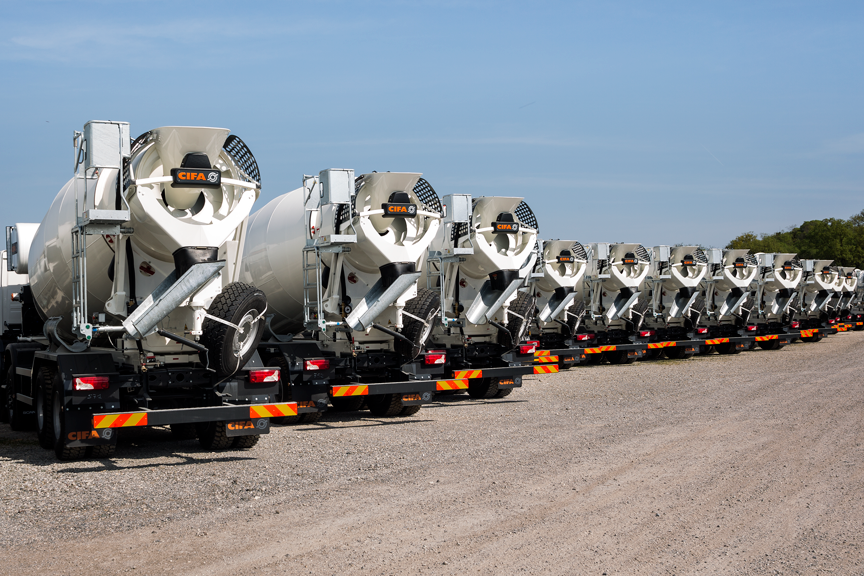
Spare parts for mixer trucks

Mixer trucks also have critical components that affect operational continuity and safety:

  • Internal drum spirals;
  • Support rollers and running tracks;
  • Gearbox and hydraulic transmission components;
  • Drum rotation system;
  • Loading hopper and discharge chute;
  • Water system and washing components.

Understanding which components are critical in mixer trucks and when to replace them is essential for properly planning maintenance and spare parts.
Betonpompa

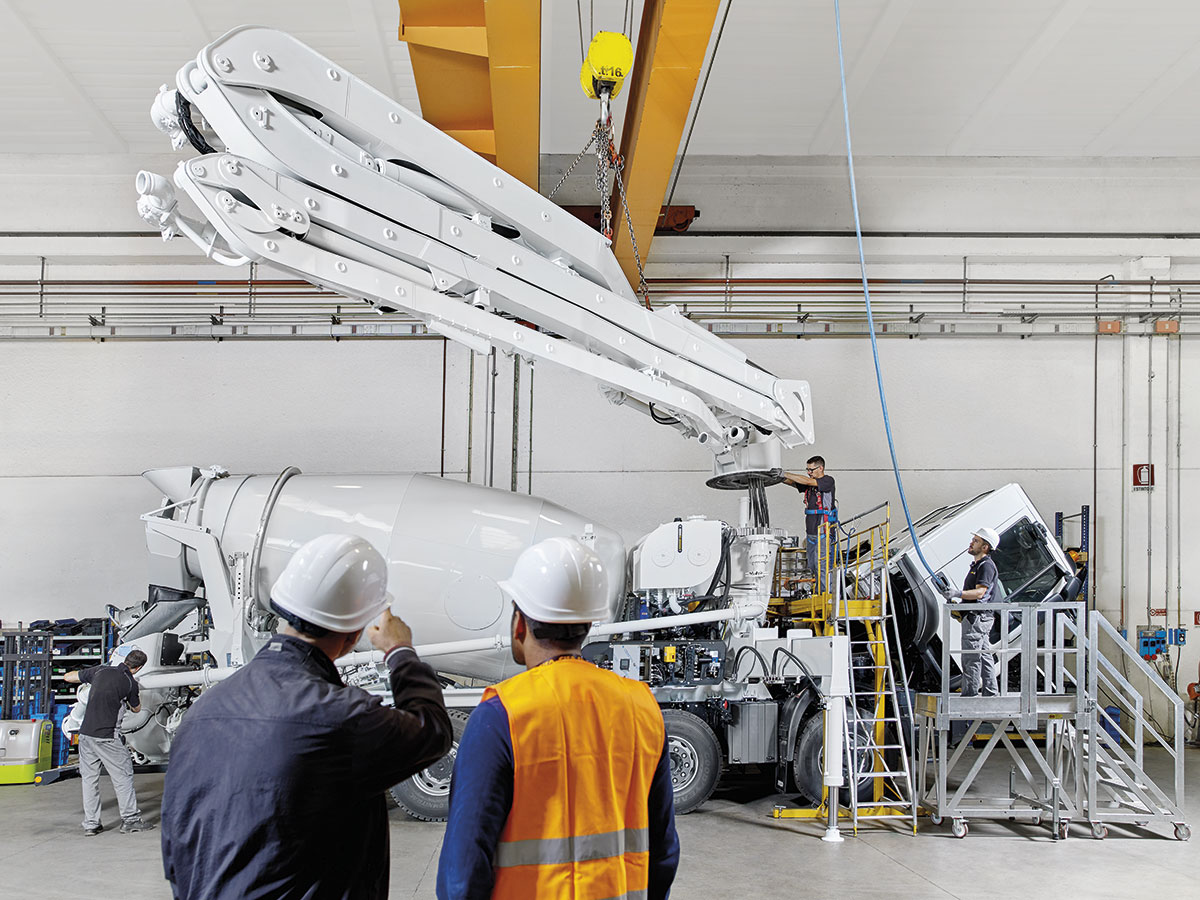
Spare parts for truck mixer pumps

In truck mixer pumps, the components subject to wear involve both the mixing system and the pumping unit, as the two functions are integrated into the same machine.

The main critical elements include:

  • Pumping unit components;
  • S-valve and related wear parts;
  • Pumping cylinders and seals;
  • Wear plates and wear rings;
  • Transmission components between the drum and the pump;
  • Elements of the delivery line.

How to chose


8. How to choose the most suitable concrete pump

To identify the most suitable solution, it is necessary to evaluate several operational and technical factors.


Evaluation Factor

Description of the Factor

Impact on Pump Selection

Jobsite type

Available space, the type of project to be carried out, and the general conditions of the jobsite.

Determines the physical configuration of the pump best suited to the operating scenario.

Pouring height and distance

 Measurement of the required pumping height and the horizontal distance to be reached.

Directly affects the machine configuration and the required performance.

Average daily volume

The average quantity of concrete handled over the course of a working day.

Establishes the required productivity and the correct sizing of the equipment.

Frequency of use

The level of intensity and continuity of the machine’s use over time.

Points toward more robust solutions and requires a more structured maintenance approach.

Availability of service and spare parts

The presence of an effective service network in the area and the availability of spare parts.

Essential for reducing machine downtime and maintaining high productivity.

TCO reduction goals

Evaluation of total cost of ownership (TCO).

Makes it possible to consider not only the initial investment, but also maintenance, consumption, and residual value over time.

FAQ

Frequently Asked Questions

  • What is the difference between a truck-mounted concrete pump and a truck mixer pump?

    A truck-mounted concrete pump is dedicated to pumping and requires a mixer truck for feeding, while a truck mixer pump combines the mixer truck and the pump in a single machine.
  • When should you choose a closed-circuit pumping unit?

    When greater efficiency, higher pressure, and advanced electronic control are required.
  • Does boom design affect performance?

    An optimized design of the sections, articulations, and turret improves load distribution, reduces vibrations, and allows for smoother, more controlled movements during pouring.
  • Why is carbon fiber used in the placing boom?

    It is used for the final sections of the boom to reduce weight and increase stiffness. This makes it possible to achieve greater reach on compact chassis, while also ensuring stability and precision during pouring.
  • How do you optimize the total cost of ownership of a concrete pump?

    Through energy efficiency, reducing unnecessary cycles, ease of maintenance, spare parts availability, and structured technical support throughout the machine’s entire life cycle.
  • Why does service affect productivity?

    Fast interventions, qualified technical support, and the timely availability of spare parts reduce downtime and ensure operational continuity.

Subscribe to the newsletter